Tuesday, October 23, 2012

Volunteer Work in Delhi

The NGO I signed up to do volunteer work in Delhi is called Volunteering Activity.  This organization has been running volunteer projects in Delhi and Dharamshala for the last ten years. The NGO’s founder, Ananta Kumar, and the project’s coordinator Arjun are very friendly and caring. Prior to starting our volunteer work, all volunteers attended a very helpful orientation session. VA's webiste: < http://volunteeringactivity.org/index.html >.
 
TEACHING ENGLISH TO CHILDREN

My sister and I spent four weeks in Delhi, teaching English to children and to women in a small school in the Nehru slum, in Faridabad. The residents in this slum knew a few words in English, but they spoke mostly Hindi language.

Children of Morning Light School
The Morning Light School currently supports around 40 children, who are divided into 2 classes ran by 2 young teachers (Sheela and Anita). It’s extremely hot inside the small classes, which have no desks or chairs. The students seat on the floor with their legs crossed, one nearly on top of another, so they can all fit in the class. They also have very little school material. Dine and I gave pencils to all the children who didn’t have one, but some of them would leave their new pencils at home and keep asking us for more.

Sheela scowling at me for disturbing her class J
Due to the intolerable heat and frequent electricity power cuts in Delhi, we often had to run our English classes outside, in the school patio. Although outdoor classes were not always ideal due to the distraction brought to the students by people and animals passing by next to the school patio. Curious men, women and other children (who are not attending school) often stopped by to watch our classes. Sometimes they even started talking to us or to the students in the middle of a class. We then had to ask them to leave, so we could keep teaching.

Outdoor Class - Colouring Activity

Pig crossing corridor next to the school patio
THE EXTREME SMELLS OF INDIA

There were no toilets in the school, so we tried not to drink too much water while we were there. When the children needed to use the toilet some would go home, but the majority would pee on the open sewage next to the school. The hardest thing for me working in this school was the sewage’s dreadful smell. L Open sewages are found everywhere throughout the slum, so the children and teachers are quite used to their rotten smell.

Open sewage next to the school
Another strong and frequent smell in the slum and throughout Delhi is of cow dung, but this one I can put up with without a problem. I think I’m even getting used to it. J Cow dung is very useful for the poor community in India. The women make cow dung cakes, which they use as fuel to light up the fire for cooking in their homes. They also use them to patch up the walls in their homes or huts. The extremes in India are a constant though. When I don't smell the cow manure on the streets, I smell the very good aromas of incense sticks, coming from the temples and houses nearby. India is a blow to all our senses!

Woman patching up wall with cow dung
WOMEN EMPOWERMENT PROJECT

To this day women in India have little voice. The project of teaching English to teenagers and young female adults. was to give them a better life prospect. The biggest challenge we faced teaching English to Indian women was the communication gap. We need a reasonable good translator, who could speak Hindi and English to help us with our classes. Our 12 years old translator Julie, although inexperienced, tried to help us as best as she could. The teenagers and young adults were really keen on attending our classes. It was a pleasure teaching English to them! 

Teaching  English to women with Julie's help
At times it was very tiring trying to communicate with the children and the women in the slum, with our broken Hindi and their broken English, but they were always so happy to see us. They always had big smiles on their faces. To contribute in a small way giving these children and women hope of a better life made this experience well worth.

Eager learner

Monday, October 22, 2012

First Glimpses of India

'Incredible India' is the country’s motto, but after sightseeing through Delhi, Jaipur and Agra, I think this slogan should be changed to 'Crazy India'! Many people come here looking for peace, but apart from a few quiet temples and mosques, my first impression of this country is of total chaos. Mind you, I thought the same of Kenya and just loved the country.   
Discovering Incredible India
INDIA’S CRAZY ROAD TRAFFIC

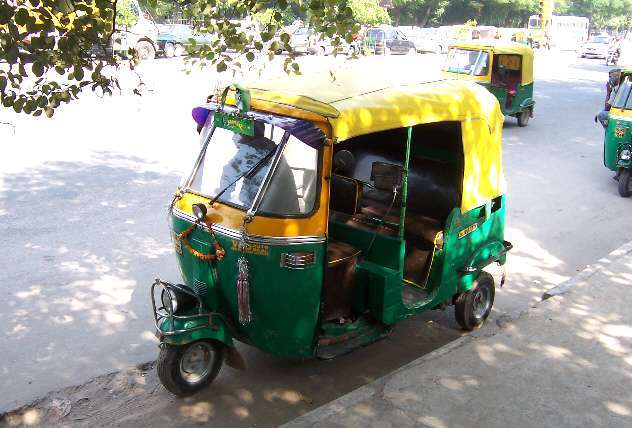
The road traffic in India has to be the craziest I’ve seen so far in my life and doubtless a huge shock to foreigners, who haven’t visited a third world country before. I’ve been to other countries, where the traffic is quite crazy, like Lima in Peru and even in my own country in Brazil, but in India it’s something beyond believe. The traffic lights seem to be on the roads just as decoration items, since no one respects them. A two road street also doesn’t mean much to the Indian drivers as cars, motorbikes, tuk tuks (a three wheel motorbike) and rickshaws (bicycle carriages) drive on both directions at any given time.

Road traffic in Delhi
Tuk tuk
Rickshaw
One thing that drives me mad in Delhi is the way all drivers constantly blow their horns while they are driving. Signs can be seen on the back of trucks saying “Please Horn” or “Blow Horn”. They blow their horns to other drivers, to pedestrians, to animals on the road and sometimes they just seem to do it out of sheer pleasure.

Truck with the sign "Blow Horn"
The animals found on the road, and at times crossing them, are many. Mostly they include huge cows, pigs and dogs, often accompanied by their bunch of calves, piglets and puppies. There are also donkeys, camels and horses, but in smaller numbers.

Camel on the roadside having a lunch break
HOLY COW

Cows are considered sacred by Hindus (the most followed religion in India) therefore these animals are allowed to roam freely on the roads. They are used to the hectic Indian traffic, grazing unpreoccupied on the roadside grass and munching on the food given away by people on the streets. Krishna, one of the most important Hindu Gods, had cows as pets, as illustrated in many Indian paintings. For this reason cows are venerated by Hindus and can be seen everywhere in India. It’s no surprise that Hindus are vegetarians! (Photo taken from the Internet)

God Krishna with his holy cows
NEW HOME IN INDIA
.
It took my sister and I by surprise when we arrived at our host family home. Since we were told by the NGO in India that Faridabad was a kind of rural area, about 45kms from Delhi, we were expecting also a kind of rural house. Instead we found ourselves in front of a modern three storey building. Our host family lives in a modern 4 bedroom apartment with three ensuite bathrooms. The best surprise though was to find out that they had hot shower with running water! My sister and I are delighted to know that we will not have to endure weeks of ‘bucket shower” with boiled water, like we did in Kenya (although the experience contributed to toughen us up! J). 

Host family's residence
HOST FAMILY

For the next four weeks we will be living with Doctor Prabhat, his wife Sushma, his father Jagdish, (who is also a doctor), and the couple’s twins Samrat and Aryan. We have known them for a little while but already find all of them lovely, even the grandpa, who looks very serious on the photo. 

Clau with Host Family
THE GORGEOUS TWINS

Samrat and Aryan, 4.5 years old, are very naughty! They enter our room as they wish, collecting whatever they want and always without asking. I had to run after them to collect my stuff back several times. We often play together and have good belly laughs, trying to communicate with them with our broken Hindi. They call us "didi', which in Hindi means sisters. We love them to bits already!

Samrat & Aryan playing with us in our room
ARRANGED MARRIAGES IN INDIA

To this day, 70% of Indian people have arranged marriages. Although man and woman are allowed to say ‘no’ to their arranged marriage, if after their initial meeting they dislike their prospective bride or groom. According to their customs, after the wedding party, the bride has to go and live with her husband’s family. Our host parents, Prabhat and Sushma, had an arranged married and only met twice before their wedding party.

TRADITIONAL CLOTHING

According to the Indian culture, after a woman got married she had to wear a Sari for the rest of her life. Nowadays, things are changing in India and in the big cities women can wear other kinds of clothes, such as “kurtas” (collarless long shirts) and leggings. Although in small villages, often rural areas, this norm still remains strong.

Generally, an Indian sari can measure between 5 to 6 meters. This long piece of fabric is wrapped around a woman’s body, hiding their shoulders and knees, as these body parts are considered sensual. On the other hand, it’s alright to show off their bellies. What I love about Indian clothes is that they are so colorful. Dine and I couldn’t help ourselves and got wrapped up in saris, while shopping at Trilok’s shop, in Jaipur. J Trilok wrapped the sari so many times around my body that it looks like I have a big waist.

Dine and I wearing an Indian Sari 
INDIAN CUISINE

Sushma, our host mother, is a great cook. Everyday she cooks fresh and laborious traditional Indian food, including dahl (lentil curry), steamed rice, Baigan Ka Bharta (spiced-smashed eggplants), Gobi Aloo (spiced cauliflower with potatoes), chapatti (a kind of Indian bread) etc. The food is served in small stainless steel dishes and balls. Due to the small portions we have to make several trips to the kitchen to get more food. J

Traditional India food - Dahl wwith Chapatti

Thursday, October 18, 2012

Mountain Hiking in Kenya

This would not be a proper trip without some mountain hiking. Since my sister and I did not have enough time to hike Mt Kilimanjaro (and probably not enough fitness!), we chose two other hiking spots, which are also very popular in Kenya - Ngong Hills and Mt Longonott.
  
NGONG HILLS HIKING
.
Ngong Hills is a very historical site in Kenya, situated about 2 hours on road from Nairobi city. This place was put on the map by Karen Blixen’s bestseller book “Out of Africa”, which later became a renowned movie. Having watched the movie and read the book, I was really looking forward to hiking these famous hills.

Ngong Hills
Karen’s vast coffee farm was located at the foothills of Ngong Hills. She was from Denmark and lived in Kenya from 1914 to 1931. The city of Nairobi named a suburb after Karen’s name, to honor everything she did for the Kenyan people during her time in Africa. Nowadays, this is one of the wealthiest suburbs in Nairobi, being mostly occupied by the less than 1% of white Kenyans.

View from the First Hill with huge Wind Turbines
To hike the seven hills takes approximately 5 hours, depending on one’s fitness. The first five peaks you walk through wide spaces bordered by vegetation. The last two peaks the walk is through narrow passageways surrounded by bush.

PARK RANGERS AND HIKING GUIDES

This is not a free hike. There is an entrance fee of around US$8 dollars at the gate of this National Park. There are also armed rangers, who will charge tourists around US$50 dollars (a huge amount in Kenyan currency!) to accompany them on the hike and protect them from possible thieves. These rangers can be very pushy and intimidating, trying to persuade tourists to hire their services (at least this was our experience with them).

My sister and I, together with Fiona, another volunteer, hired the services of hiking guide for US$18 dollars. Peter was not armed with a gun, but with a wood stick, since he was a Maasai. He was a very nice guide. Peter's mobile number 0711 703 484.

Dine, Fiona and I on the Fourth Hill
SAFE TIP!
.
For those not wishing to hire the services of rangers or hiking guides, it’s highly recommended to go on big groups, mixed with male and females. This is to avoid bad experiences, such as being mugged by thieves hiding in the bush, as this has happened to tourists in the past.
.
During our hike, we joined a very animated group of Kenyan University students. They were also volunteers, but for the local Red Cross. They were undergraduate students from different courses and were there to bond with each other (since we joined their group, it included bonding with us too!). They were very kind sharing their food and drinks with us. We also had a good laugh playing some funny group games with them, which later we taught them to children in the orphanage.

Dine, Fiona and I with the University Group
The wildlife we found on these hills included goats, cows and this nice chameleon. We also heard that you can spot buffalos there, but it does not happen very often.

Wildlife at Ngong Hills - Chameleon
The views from the seven hills were stunning, making this another worthwhile hike. It was also very nice to go up the mountains to breathe some fresh air, since Nairobi city is so full of dust and pollution.

MOUNT LONGONOTT HIKING
.
Mt Longonott is a dormant volcano, situated in Naivasha, a town about 200kms from Nairobi city. According to our hiking guide Fred, its last eruption was around 150 years ago. Fred also told us that the original name of this volcano was Oloonongot, but it was modified by the British to Longonot, since they could not pronounce the original name properly.

Longonott Volcano
This was the first time my sister and I hiked up a volcano. Is was a steep and dirty hike, but well worthy once you reach the top and can admire the splendid view. Depending on one’s fitness it can take up to 1.5h to 2hours to reach the top and a bit less to go down. Hiking boots are highly recommended as there are some slippery patches with ashes. Wearing dark clothes is also wise, since hikers will get completely covered with ashes, just like we did. J

Volcano's crater
Volcano's ashes
Walking around the crater can take up to 4 hours, depending on one’s fitness. Some people even venture themselves going down in the crater, but we heard that it can be a bit slippery and dangerous, so we skipped it. Before going downhill, we stopped in a nice shaded spot, where a kiosk was recently built, to have some snacks while we appreciate the magnificent view and peaceful surroundings.
.
Walking around the crater with guide Fred
This is not a free hike also. The entrance fee is around US$ 20 dollars, to be paid at the gate of the National Park. The hiking guides charge around US$20 to hike up and down the mountain and around $30 dollars if you want to walk around the crater. It’s not necessary to book their services in advance. We thought it was worth paying for a guide, as they explain about the history of the place, which we find very interesting. Fred was such a nice guide and very knowledgeable. Fred's mobile number 0701 277 533.
.
Goodbye Kenya!
Longonott was the last place we visited in Kenya. Dine and I are now heading off to our next destination in India!

Tuesday, October 16, 2012

Maasai Tribe in Kenya

There are about 42 tribes in Kenya and the Maasai is the most notable of them, due to their distinguished lifestyle and costumes. There are different Maasai tribes throughout Kenya. My sister and I visited Saikeri Village, which is about 2 hours on road from Nairobi city. This was the roughest dirty road from all the places I visited in Kenya. This is owed to the erosion after the many raining seasons. This land seemed like a place, which has been forgotten by the Kenyan government.

Maasai landscape
TWO AMAZING VOLUNTEER PROJECTS

NIGHT SCHOOL FOR THE MAASAI MEN
.
This school was started by Kyle, a young volunteer from Perth, in Australia. Although, Kyle is now back to Australia his legacy is still felt by the Maasai men, as he continues to support the night school sending money every month to pay the school expenses, including the teachers’ salaries.
.
This is a night school because during the day the Maasai men take their animals out to graze. Most men walked around 20kms to get to the school and another 20kms back home in the dark. We had a chance to meet with some of them, who were very keen to practice their English with us volunteers. The chance to attend this night school changed many of their lives. We could see that a world full of new opportunities opened up to them. Some of them were now on Facebook and had emails to keep in touch with volunteers and other friends.

Night School for the Maasai Men
Classroom ran by Solar Energy
BOARDING SCHOOL FOR THE MAASAI GIRLS
.
This second project was started by Jane, another volunteer from Australia. She built a boarding school for Maasai girls, which currently supports 25 teenagers between 12 and 15 years old. Jane, with the help of Maggie, a Maasai nurse, opened this school to protect the girls from getting mutilated by their families or raped (both common practice in the Maasai tribe).
.
Mutilation is now an illegal practice in Kenya and families caught doing this can pay a heavy fine. Although, we heard that this still happens in the community secretly.  Jane is also back to Australia but continues to support the boarding school financially. (If you'd like to learn more about this subject I recommend a book called “Infidel”, by Ayaan Hirsi Ali).

Young Maasai girls helping out with the daily chores
We also visited the only clinic in the Saikeri village, where Maggie works, with some very brave volunteers. Maggie gave a talk to our group, which was very inspiring. She is one of the bravest women I met in Kenya. She broke with all her tribe traditions when she legally divorced from her husband, due to domestic violence.
.
Divorce rarely happens in a Maasai tribe. She also accessed tertiary education in the city, with some financial help, becoming a nurse. Later on, she decided to return to her village to help out the young Maasai women in her community, so that they would not have to go through what she went. I felt goosebumps listening to Maggie talking. What a warrior she is and what a wonderful job she is doing!

Since there was a teacher’s strike when we arrived in Saikeri, we slept in the school with the other volunteers. The Maasai community was so intrigued with all the new volunteers, that they couldn’t help coming in and out of the dormitory watching every single thing we did, from eating, to brushing our teeth. The lack of privacy was felt by all volunteers, but we couldn’t help laughing at the situation sometimes.

Boarding School - Girls' Dormitory
In the evening, the Maasai men made a nice fire for us, which we used to melt some marshmallows. It was their first time eating melted marshmallows and so was mine. Despite feeling so tired after a long day walking under the hot sun, it felt nice being there with Dine and the other volunteers, sharing a nice evening with the Maasai men and their children. That evening, we all went to bed without having a shower. We only had baby wipes to wipe our very dirty feet. J

Sharing our stories around the Fire
Dine and I were really postponing going to the toiled that evening, as it was an 8 minutes walking from the school, in the dark.  In the end, we went there in a caravan with other volunteers, with the help of torches. Dine and I held tied to each other’s arms watching out for hyenas in the bush. The toilet was a whole on the ground, which freaked out most volunteers. What an experience!

STRIKING FACTS ABOUT THE MAASAI CULTURE
.
There were some striking facts about the Maasai culture which left me speechless. Firstly, the Maasai people would take the babies born with disabilities to the bush, tied them up to a tree, throw blood on them and leave them there to be eaten by wild animals, such as lions, leopards and hyenas. They did this because they considered disabled babies to be a curse to their families. They also did this to the elderly, when they could no longer take care of themselves, becoming a burden to the community. This practice is no longer accepted but our guides told us that in some tribes they still carry it out in secret.

Secondly, the Maasai men can have intercourse with any teenager/women in the tribe and it does not matter if the women are married or not. They can just knock on the door and ask permission to the husband. The Maasai men can also have many wives, while the women can only have one husband. Although, we heard from some Maasai men that nowadays this is changing and the younger generation of Maasai men are only sticking to one wife and having less children compared to their descendants. According to them, it is due to the ever increasing cost of life. On the photo below, the mother next to my right is 15 years old (she was a baby having another baby').

Dine and I with a Maasai family
The third fact, is that the Maasai women do all the heavy work in the tribe, such as building the family hut and repairing it as needed, cooking, washing taking care of the children, walking miles daily to get water, making jewellery etc. The job left for the men is to take their goats and cows to graze. The men will often walk many miles every day to look for food and water for their animals. For the Maasai, wealth is not weighed by the amount of money they have, but by the number of animals one has.
.
Maasai woman carrying a roof sheet metal to her hut

Woman making jewellery with beads to sell in the market
We also visited a small Maasai market in this village, where they sold their colourful jewelleries and “shukas” (long pieces of cloth, which they wear around their upper bodies). Maasai people usually wear bright red shukas, as they believe this colour will protect them from being attacked by wild animals. Each man also carries a wood stick to assist them on their long walks.
.

Maasai stool selling "shukas"
The forth, is that the Maasai men drink cow blood mixed with milk, as they believe it makes them stronger. They also make permanent tattoos on their bodies with fire. Volunteers, who wished to, could join the Maasai men in these practices. Although, no volunteer from our group took part on it.

BOMAS AND MANYATTAS
Visiting the "Bomas" was also very interesting. They are the compounds where the Maasai people live. All thes compounds we visited were surrounded by spike trees, like the one below.

Bomas - Maasai Compounds
Inside the Bomas there are "Manyattas", which are huts built by women with cow dung and tree branches.

Outside a Manyatta
We were allowed inside a manyatta from a beautiful and very friendly Maasai lady. She loved being in all photos and asked us to take more, opposite from other Maasai people, who did not want volunteers taking their photos at all. It was very dark and extremely hot inside the manyatta. It was a suffocating experience, which left us all dripping with sweat, especially after drinking a hot tea offered by our very smiling hostess.

Inside Mary's manyatta
After a nice bush walk with our guide and some Maasai students from the Night School, we stopped at the Great Rift Valley to rest while we watched a splendid sunset. The young Maasai men taught us about their culture, some medicinal trees and how they use a particular tree branch to brush their teeth. I  highly enjoyed spending time with the Maasai people.
Volunteer Group with some Maasai Men

Friday, October 12, 2012

Sarafi in Kenya

Kenya is known as one of the best places in the world to go on a safari to see animals. Safari is a Kiswahili word and in English it means journey or trip. Many years ago, people would go on a safari to hunt animals as a leisure activity or to sell the animal body parts. The places where the hunting took place were called Game Reserves. Some locals killed animals, such as elephants and rhinos, predominantly to remove their horns and sell them for medicinal purposes or as ornaments. After 1960’s this practice became illegal. Nowadays, poachers can spend up to 10 years in jail if they get caught killing an animal. 

My sister and I went on safari to Maasai Mara National Park, to treat ourselves for both our birthdays last month. This is the most popular park to go on a safari in Kenya. It’s about 3-4hours on road from Nairobi city. The road is mostly bumpy and dirty, making it a long and tiring trip, but the trembling is all worth once you get there.

Maasai Mara landscape
This four day safari tour was recommended to us by our local volunteer organization in Kenya (Network for Voluntary Services). The tour guides/drivers were locals with lots of knowledge about the animals and Kenya in general. They formed a funny pair called Michael & Jackson. They were hilarious and we highly enjoyed spending time with them. They drove us on a 4x4 van, which was not a fancy vehicle but did the job. In fact, we saw only a few tourists in posh 4x4 vehicles. The ceilings of these vans can be lifted for a better view of the animals.

Clau with Tour Guides Michael & Jackson
ZEBRAS
The very first animals we saw as soon as we arrive at Maasai Mara were the zebras. We saw so many of them! It was fascinating! The interesting as well as sad fact about the zebras is that the male will often kill the cubs in the female’s womb, during matting, if they are not his cubs. The males can smell when the cubs/babies are not their own. This act is carried out this to keep their own genes in the herd.

Curious Zebras
THE WILDEBEEST MIGRATION
During September, we were able to witness the wildebeest migration, where 1.5 million of these animals embark on an epic trek out of the Serengeti Park in Tanzania to the Maasai Mara National Park in Kenya. This extraordinary journey happens from July to October every year, which are the best months to go on a safari. Predators that depend on the wildebeest for food follow them and the result is a concentration of wilidlife unequalled to any other part of Africa.

Wildebeests
THE “BIG FIVE”
My sister and I saw pretty much all the wildlife species in this park, including the “Big Five”, which are the biggest animal attractions in a safari. These animals include the buffalo, elephant, leopard, lion and rhino. They were given this name as in the past they were the hardest and most dangerous animals to hunt on foot. Many people got killed hunting them, mostly locals with primitive weapons, such as spears. The only animal we were not able to see was the hyena, because they usually hide during the day and come out during the night.

BUFFALO
A myth about buffalos is that they will charge after a person with a red piece of cloth, like the bullfighters in Spain. We were told that buffalos cannot see colours and they will charge after a human being if they get teased. When it happens, the way to save your skin is to drop any piece of your cloth on the ground and keep running for your life. Most often, the buffalo will stop to smell your cloth and momentarily forget about you. J

Buffalo
ELEPHANT
When we asked our tour guide Michael if he ever had any incident with an animal, he told us take he was charged by a female elephant. This happened on his early days as an inexperienced guide, when he got too close to the female’s elephant curb. He said that he has now learnt his lesson and never get near the babies.

Elephant curb happily with its Mother
LEOPARD
The only feline which can climb a tree. After they kill their pray, they will usually place their dead body on the top of a tree to stop other animals from eating their food.

LION
A remarkable fact about lions is that during matting season they can mate 25 times per day, but it lasts around 8-12 seconds. Generally, they eat 55 kilos of meat per day. Male lions, like male zebras, also kill other male cubs. They live between 12-15 years and the females around 18 years.


Lion crossing peacefully between the vans
Lion walking slowly after a good feed
RHINO
There are two types of rhinos in Kenya: the white and the black rhino. The last one is an endangered species, due to excessive poaching (illegal killing). These massive animals feed only on grass, like the hippos. They weight around 3000 kg. Their biggest predators are human beings, who kill these gigantic beasts to remove and sell their horns in the black market. The rhino horn can be worth more than gold in Africa. Sadly, some national parks in South Africa are removing the rhinos’ horns as soon as they are born, to stop illegal hunters from killing these animals.
.
White Rhinos
CHEETAH
My favourite creature though was the Cheetah, which is the fastest animal in the world, reaching 110kms per hour. There is something beautiful about these felines’ posture and their confident look, which is so attractive.

Cheetah hiding in the bush from the heat
HIPPO
My second favourite creatures were the hippos. This was the very first time I saw hippos on the wild and it was such an impressive sight. It was interesting to learn that despite of their huge size they are vegetarians, feeding largely on grass. They spent most part of the day in the water, getting out at night to eat. Another curious fact is that they will only kill human beings who cross their demarked territory, leaving their bodies behind (they don’t eat them).

Hippos bathing at Mara River


VERVERT MONKEY
This monkey with fluorescent ‘blue balls’ was ‘THE SHOT’ of the Safari. There is no trick on this photo, the colour is real! There was not a single person, who would see this photo and not have a good laugh. There were loads of these monkeys around the campsite, where we stopped for lunch. Nedless to say that they were there to help themselves with the leftover food.

Ververt monkey
MANYATTA CAMP
 
The accommodation at Manyatta Lodge was outstanding. We stayed in permanent tents, where we could enjoy a nice ‘warm’ shower with proper running water. It was such a treat after spending some weeks having ‘bucket shower’ in our host family house. J

Eating Area
Permanent tents
During these four days, we also had a chance to bond with other volunteers and meet with some nice tourists. We had a diverse group in our van with volunteers from Italy, Australia, Malaysia and Brazil, of course.
 
Group photo on the border of Tanzania and Kenya
LAKE NAKURU NATIONAL PARK
On the last day, we visited Lake Nakuru National Park and Lake Naivasha. They both had a very different landscape from Maasai Mara. Lake Nakuru is surrounded by a dense forest. Once again, we had the chance to see some amazing wildlife and many different species of birds, including pelicans, storks, flamingos and others. Unfortunately, we did not take a good shot of the flamingos as they were too far out on the lake.

Lake Nakuru viewed from a lookout point
Baboons spotted everywhere on the road at Lake Nakuru
KINGFISHER BIRD
This was in my opinion the most colourful and beautiful bird at Lake Nakuru. It is a tiny bird but with a long beak to eat fishes. They are usually spotted near the lake to feed on the fishes.

Kingfisher bird
AGAMA LIZARD
This was yet another colourful creature we spotted at Lake Nakuru. Its vibrant blue and orange colours are to attract the female lizard, which in contrast is a boring plain brown colour.

Agama lizard
LAKE NAIVASHA
After Lake Nakuru, we had a quick stop at Lake Naivasha to go on a boat ride to take a closer look at the hippos in the water. The boat stopped at Crescent Island, where we went on a ‘walk safari’ to see more wildlife up-close, such as zebras, wildebeests and giraffes.

Boat ride at Lake Naivasha
Hippo under water

Walk Safari with wildebeests on the background
THE GREAT RIFT VALLEY
On the way back home, we watched a stunning sunset along the Great Rift Valley. This is the longest valley in the world, starting in Israel and finishing in Mozambique. As soon as you leave Nairobi you're able to see the Rift Valley’s mountain range, which goes all the way to Maasai Mara.

Sunset at The Great Rift Valley
The animal safari was one of the most special things I have done in my life. It was amazing to see so many beautiful and exotic animals cohabiting together in one place. This was a truly  unforgettable experience!